Stair Trim & Railings on Long Island
A staircase is one of the first things people see in a house, and the trim around it does a lot of work: it covers the joints between the stairs and walls, ties the stairs to the rest of the house’s millwork, and gives the railing a finished look.
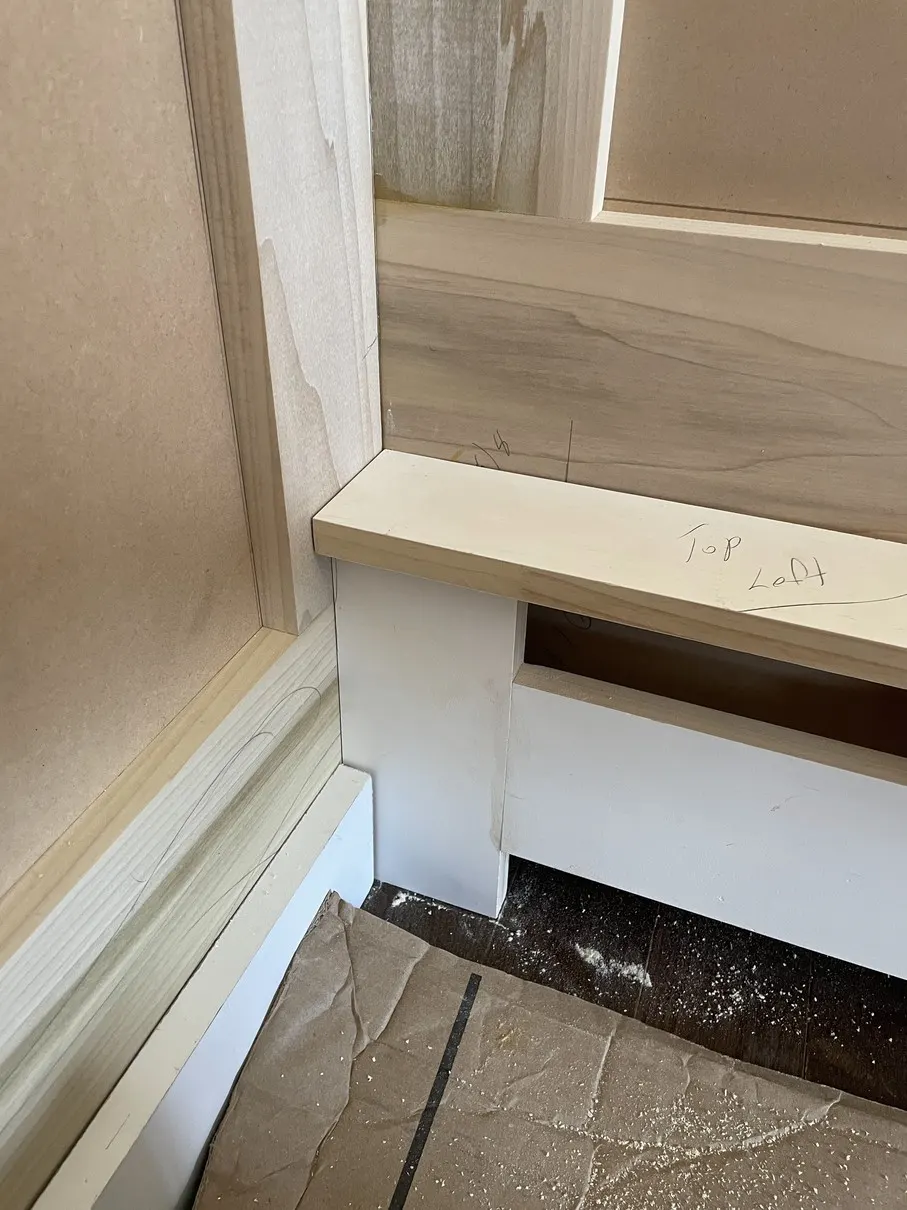
This page covers finish carpentry on interior staircases: the trim and woodwork that surrounds the stairs. We handle the visible finish work; structural changes to the stair itself are scoped separately.
What We Do
- Skirt boards along the wall side and open side of the stairs
- Stair wainscoting that follows the rake of the stairs
- Replacing or adding balusters (spindles)
- Newel posts, handrails, and handrail trim
- Tread and riser trim, returns, and nosing details
- Matching stair trim to the casing and baseboard in the rest of the house
What’s Involved
Stair trim is all angles. Skirt boards have to be scribed to follow the treads and risers precisely, and stair wainscoting has to follow the rake of the stairs while lining up with the wainscoting on the landing or the room below. Each baluster is cut to the angle of the rail and to its own height, and the spacing has to stay consistent along the run.
Railing work also has safety requirements. Building code sets limits on baluster spacing, handrail height, and handrail graspability. When balusters or railings are replaced, we build the new work to meet those requirements.
Material Options
Painted stair trim is usually poplar or MDF. Treads, handrails, and newel posts are typically hardwood such as oak or maple, often stained to match the floors. Balusters come in wood or metal in a wide range of profiles, and wood balusters can be painted or stained. We can match existing profiles or help you pick new ones that fit the style of the house.
How a Project Is Scoped
We look at the staircase layout (open on one side, between two walls, with or without a landing), the condition of the existing trim and railing, and what you’d like to change. Replacing balusters alone is a different scope from adding skirt boards, stair wainscoting, and a new newel post. We’ll also check how the stairs meet the flooring if that’s being replaced at the same time.
How Long It Takes
Adding skirt boards or replacing balusters on a single straight run is a shorter project than a staircase with a landing, a turn, or a full set of wainscoting. Stain and paint time are part of the schedule. We’ll give you a realistic timeline once we’ve seen the stairs.
What Affects Cost
- Number of steps, landings, and turns
- How many balusters are being replaced and the style chosen
- Wood versus metal balusters; paint versus stain
- Adding stair wainscoting in addition to skirt boards
- Condition of the existing stair and wall surfaces